How modern food habits are nudging our brains — and 20 tasty rescue missions you can nibble on now.
If you’re anything like the rest of us — juggling work, a dwindling fridge, and the romantic idea of a “balanced diet” that usually lasts until 6 p.m. — then the word snack usually means “something that shuts the hanger down fast.” But what we snack on matters. Modern diets high in ultra-processed foods and added sugar aren’t just bad for the waistline; mounting research links them to poorer cognitive health over time. The good news? A handful of smart, single-serve snacks can help protect memory, mood and concentration — and they don’t require a food processor, a confession, or a second mortgage. JAMA NetworkBioMed Central
Quick Science Bit
Modern, ultra-processed and high-sugar diets are associated with increased risk of cognitive decline and dementia — while dietary patterns rich in whole foods, unsaturated fats (especially omega-3s), polyphenols (berries, dark chocolate), and leafy greens are linked to better brain outcomes. The Mediterranean and MIND diets — both food patterns, not fads — consistently show protection against Alzheimer’s pathology and cognitive decline. JAMA NetworkNational Institute on Aging
Why these foods? The brain loves:
- Healthy fats (DHA/EPA omegas) for cell membranes and signalling. Alzheimer’s Drug Discovery Foundation
- Antioxidant polyphenols (berries, cocoa) to reduce oxidative stress. AJCN
- Stable blood sugar and fibre to avoid glucose spikes that may harm long-term cognition. BioMed Central
How to use this list
Each snack below is single-serve or easily portioned for one. I’ve noted what the snack brings to the brain, a quick make-or-buy option, portion guidance, and a tiny storage/reheat tip when useful. These are all realistic for a Melbourne pantry (or your nearest supermarket), and are quick to assemble — perfect for Plan4One readers.
The 20 Best Snacks for Brain Health
- Walnuts + a small apple
Why: Walnuts supply ALA omega-3s and antioxidants; the apple adds fibre for steady blood sugar.
How: ¼ cup walnuts + 1 small apple. No prep. Store nuts in fridge for freshness. - Greek yoghurt with blueberries and a sprinkle of chia
Why: Protein + probiotic yoghurt for gut-brain axis, blueberries for anthocyanins.
How: 150 g yoghurt + ½ cup blueberries + 1 tsp chia. Use frozen blueberries if fresh aren’t handy. AJCN - Tinned sardines on wholegrain crackers
Why: DHA/EPA stars for neuronal membranes; wholegrain carbs for slow energy.
How: 1 small tin sardines (in olive oil) + 4–6 wholegrain crackers. Store tins in pantry. - Avocado on rye/wholegrain toast
Why: Monounsaturated fats support blood flow and neuronal health.
How: ½ avocado mashed on 1 slice rye toast; add lemon and black pepper. Best fresh. - Mixed berries + a handful of raw almonds
Why: Polyphenols + vitamin E and healthy fats.
How: 1 cup mixed berries + 10–12 almonds. Frozen berries are fine. Center For Food As Medicine & Longevity - Hummus + carrot sticks
Why: Chickpeas supply plant protein and B vitamins; hummus has olive oil for healthy fats.
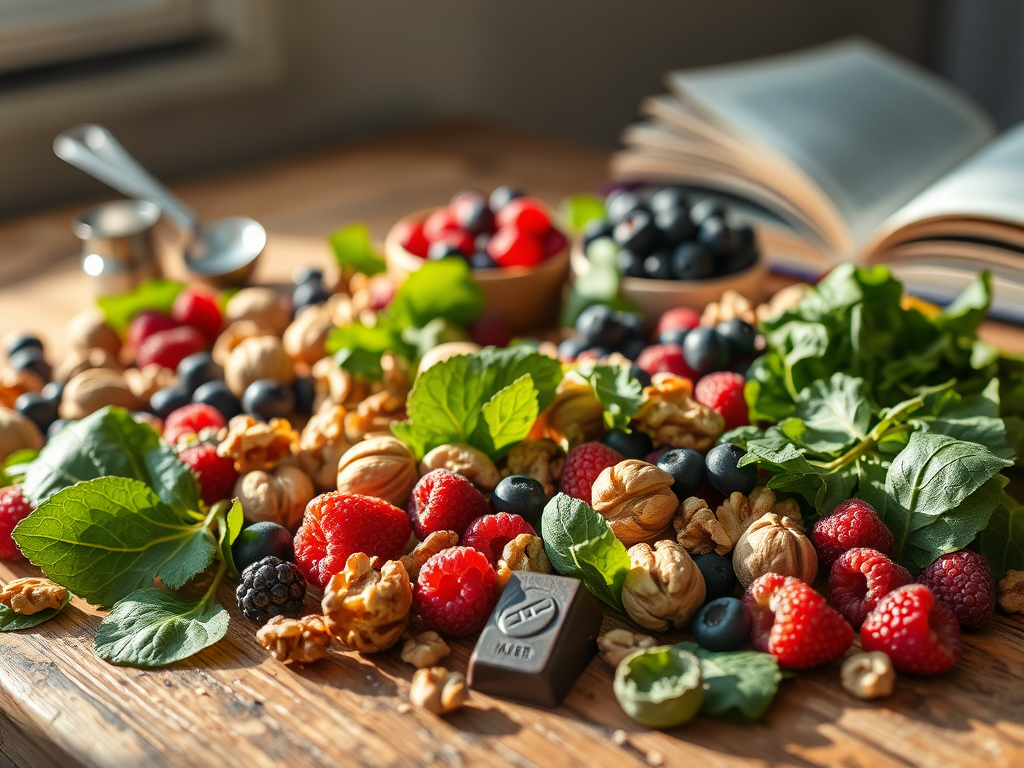
How: 3 tbsp hummus + 1 medium carrot, sliced. Store hummus in fridge. - Dark chocolate (70%+) + walnuts
Why: Cocoa flavanols help blood flow and short-term cognition; nuts add omega fats.
How: 20 g dark chocolate + ¼ cup walnuts. Moderation — it’s a snack, not dinner. - Hard-boiled egg + cherry tomatoes
Why: Eggs provide choline (important for memory) and high-quality protein.
How: 1 hard-boiled egg + handful of cherry tomatoes. Boil in batches. - Edamame with sea salt
Why: Plant protein, folate and magnesium for nerve function.
How: ½ cup shelled edamame. Steam or buy frozen; microwaves fine. - Cottage cheese + sliced pear + cinnamon
Why: Slow-release protein + fruit polyphenols and fibre.
How: ½ cup cottage cheese + 1 small pear. Freshness: keep dairy chilled. - Smoked salmon roll-ups (salmon + avocado)
Why: Omega-3s + monounsaturated fat — double brain boost.
How: 50 g smoked salmon + ¼ avocado sliced, rolled together. - Pumpkin seeds + dried blueberries
Why: Magnesium, zinc and polyphenols — minerals that support synaptic function.
How: 2 tbsp pumpkin seeds + 2 tbsp dried blueberries. Watch added sugars on dried fruit. - Peanut butter on celery (or rice cake)
Why: Peanut butter gives vitamin E and protein; celery adds crunch without big carbs.
How: 1 tbsp peanut butter + 2 celery sticks or 1 rice cake. - Kefir smoothie: kefir + banana + spinach
Why: Probiotics and folate; banana for gentle carbs.
How: 200 ml kefir + ½ banana + a handful of spinach, blitz. Quick energy and gut support. - Roasted chickpeas with turmeric
Why: Plant protein and fibre; turmeric has anti-inflammatory curcumin (pair with pepper).
How: Roast canned chickpeas with oil, turmeric, pepper and salt. Store airtight. - Green tea + small handful of pistachios
Why: L-theanine + caffeine combo improves focus; pistachios supply healthy fats.
How: 1 cup green tea + 15–20 pistachios. - Oat porridge pot with cinnamon and walnuts
Why: Beta-glucans for steady glucose control; cinnamon may help glycemic response.
How: ½ cup rolled oats cooked with water or milk, topped with 1 tbsp walnuts. Make overnight oats for convenience. - Small tuna salad (tuna, olive oil, lemon, capers) on cucumber rounds
Why: More omega-3s, plus polyunsaturated fats and low-GI delivery.
How: 1 small can tuna (oil drained) mixed with lemon & olive oil, served on cucumber slices. - Orange slices + a few brazil nuts
Why: Vitamin C supports blood vessel health; brazil nuts provide selenium for antioxidant enzymes.
How: 1 medium orange + 1–2 brazil nuts (don’t overdo brazil nuts — high selenium). - Blueberry-oat energy ball (no bake)
Why: Blueberries = polyphenols; oats = fibre and slow carbs; nut butter = healthy fats.
How: ½ cup oats + 2 tbsp nut butter + 2 tbsp dried/frozen blueberries, rolled into 4 balls. Keep refrigerated. ScienceDirectAJCN
Practical tips (real life version)
- Batch-prep: Hard-boil eggs, roast a tray of chickpeas, and portion nuts into snack bags for the week.
- Portion control: Nuts are nutrient-dense (and calorie-dense). Aim for a small handful, not a whole jar.
- Watch hidden sugar: Many “healthy” bars and dried fruits hide added sugar — check labels. High sugar patterns are linked to worse cognitive outcomes over time. BioMed Central
- Rotate variety: Different nutrients come from different foods — rotate berries, leafy greens, seafood, nuts and legumes across the week.
- Make swaps: If you love chips, try roasted chickpeas or seaweed snacks instead for crunch with benefit.
Short FAQ
Q: Is one snack going to “fix” my brain?
A: No single snack is a magic pill. Think patterns — frequent choices add up. Swapping one ultra-processed snack a day for a nutrient-dense alternative is a small, high-value habit. JAMA Network
Q: How much fish/omega-3 do I need?
A: Aim to include fatty fish (or equivalent) a couple of times a week; for snacks, sardines and smoked salmon are easy single-serve ways to add DHA/EPA. Alzheimer’s Drug Discovery Foundation
Final Note
I wrote this list for my fellow solo cooks who want brain-smart snacks without the drama. Try swapping one usual go-to — say, packet biscuits — for one of the snacks above for a week and see if your afternoon fog lifts. If you like this, I can turn the top 10 into mini recipe posts with shopping lists, cost-per-serve, and printable Plan4One stickers for your fridge. Want that? Hit subscribe or drop a comment and tell me your favourite late-night nibble — I’ll judge gently (and suggest a healthier swap).
Sources & further reading
- Association between consumption of ultra-processed foods and cognitive decline, JAMA Neurology. JAMA Network
- MIND & Mediterranean diets associated with fewer Alzheimer’s brain signs, National Institute on Aging summary. National Institute on Aging
- Large UK Biobank analysis linking sugar intake to dementia risk. BioMed Central
- Wild blueberry (poly)phenols — vascular and cognitive benefits, AJCN. AJCN
- Omega-3s and cognitive function review — Alzheimer’s/dementia prevention resources. Alzheimer’s Drug Discovery Foundation