
Let’s be honest. Most of us know we should exercise more. We know sitting around all day isn’t doing us any favours, and we occasionally make ambitious promises to ourselves about joining a gym, taking up running or becoming the sort of person who happily gets up at 5 am to exercise.
Then reality kicks in.
Between work, household responsibilities, family commitments and simply trying to get through the week, finding the motivation to exercise can be a challenge.
And what if you’re not particularly fit? What if your knees complain when you walk too far, your back feels stiff after sitting at a desk all day, or touching your toes seems about as achievable as climbing Mount Everest?
Well, here’s an idea worth considering: Chair Yoga.
Yes, yoga performed while sitting in a chair (with a few standing movements where appropriate).
It might not look particularly strenuous, but Chair Yoga can help improve flexibility, mobility, posture and muscle engagement. It can also become a useful part of a broader fitness routine designed to support healthy weight management.
And the best bit? You don’t need an expensive gym membership, fancy equipment or a particularly large living room.
All you really need is a sturdy chair, a little space and 15–20 minutes to get started.
So, let’s explore whether Chair Yoga deserves a place in your healthy living routine.
1. What Exactly Is Chair Yoga?
Chair Yoga is a modified form of traditional yoga that uses a chair for support.
Instead of performing every movement on a yoga mat, many exercises are adapted so they can be completed while seated. Some routines also incorporate standing movements using the chair for balance and stability.
The idea is simple: make the benefits of yoga more accessible without requiring the same levels of flexibility, balance or physical ability associated with some traditional yoga poses.
A typical Chair Yoga session might include:
- Gentle stretching to improve flexibility.
- Controlled movements to encourage joint mobility.
- Breathing exercises to help you relax.
- Gentle twisting movements to improve spinal mobility.
- Leg and arm exercises to engage muscles.
- Posture exercises to encourage better alignment.
Chair Yoga can be particularly appealing to beginners, people returning to exercise after a break, older adults and anyone who prefers a gentler approach to physical activity.
It is also a practical option for people working from home or spending long hours sitting at a desk.
Think of it as giving your body a gentle reminder that it was designed to move.
2. The Benefits of Chair Yoga
While Chair Yoga isn’t going to transform your fitness overnight, practising regularly can offer several worthwhile benefits.
Let’s look at some of the main ones.
Improved Flexibility
One of the most noticeable benefits of yoga is its ability to encourage greater flexibility.
Many of us gradually become less flexible because we spend so much time sitting, driving, working at computers or generally avoiding movements that challenge our range of motion.
Chair Yoga introduces gentle stretches that target areas that commonly become stiff.
These include:
- Hamstrings and the backs of your legs.
- Hips and lower back.
- Shoulders and upper back.
- Neck and upper body.
- Calves and ankles.
Regular, comfortable stretching can help improve your range of motion over time.
You don’t need to be able to touch your toes or fold yourself into a human pretzel. The aim is simply to move a little more comfortably than you did yesterday.
Better Joint Mobility
Flexibility and mobility are related, but they aren’t quite the same thing.
Flexibility refers to how far your muscles can comfortably stretch. Mobility involves how well your joints move through their available range of motion.
Chair Yoga incorporates controlled movements that encourage your shoulders, hips, knees, ankles and spine to move.
This can be particularly helpful if you spend much of your day sitting.
Improved Posture
Poor posture is an occupational hazard for anyone who spends hours looking at a computer screen.
Before you know it, your shoulders are rounded, your head is leaning forward and your upper back is doing its best impression of a question mark.
Chair Yoga includes movements that encourage spinal mobility, shoulder movement and greater awareness of how you hold your body.
Over time, these exercises may help you develop better postural habits.
Gentle Muscle Engagement
Don’t make the mistake of thinking that sitting down means your muscles aren’t working.
Several Chair Yoga exercises engage your abdominal muscles, thighs, shoulders and arms.
Seated leg extensions, controlled marching and certain balance exercises can all provide a gentle muscular challenge.
While Chair Yoga isn’t a replacement for a dedicated strength-training programme, it can be a useful starting point for developing a more active lifestyle.
Better Balance and Coordination
Some Chair Yoga routines incorporate standing movements using a chair for support.
These exercises can help develop body awareness, coordination and balance.
Improved balance is particularly valuable as we get older, although anyone beginning standing exercises should use a stable support and work within their abilities.
Relaxation and Stress Management
Yoga also places considerable emphasis on breathing and controlled movement.
Taking 15–20 minutes away from work, household responsibilities and the general chaos of everyday life can provide a welcome opportunity to slow down.
The combination of gentle movement and mindful breathing may help reduce feelings of stress and tension.
Sometimes the best thing you can do for yourself is simply stop rushing around for a few minutes.
3. Can Chair Yoga Actually Help You Lose Weight?
Now we’re getting to the question many people are probably asking.
Can sitting in a chair and doing yoga actually help you lose weight?
The short answer is yes, but there are a few things you need to understand.
Chair Yoga generally burns fewer calories than more vigorous activities such as brisk walking, swimming, cycling or running.
Consequently, relying on Chair Yoga alone is unlikely to produce significant weight loss.
However, that doesn’t mean it has no place in a weight-management programme.
Here’s why.
It Encourages You to Move More
If you’re currently spending most of your day sitting, introducing 15–20 minutes of Chair Yoga is a positive change.
Even relatively gentle movement contributes to your overall daily activity.
It may not feel like a major workout, but establishing the habit of moving regularly is an excellent starting point.
It Helps Prepare Your Body for Other Activities
One of the biggest obstacles to exercising is feeling uncomfortable when you move.
Stiff hips, tight hamstrings, restricted shoulders and poor mobility can make even relatively simple activities feel difficult.
Improving your flexibility and mobility may make other forms of exercise more comfortable.
You might find that walking becomes easier, standing for longer periods feels more comfortable and you’re more confident trying basic strength exercises.
It Can Help You Establish a Consistent Routine
Consistency matters enormously when it comes to weight management.
A challenging exercise programme that you abandon after two weeks isn’t particularly useful.
A manageable routine that you continue for months is much more valuable.
Chair Yoga offers an accessible way to build an exercise habit without needing to reorganise your entire lifestyle.
What About Belly Fat?
Let’s address this one directly.
Unfortunately, there isn’t an exercise that specifically targets belly fat.
You cannot choose where your body loses fat simply by exercising a particular muscle group.
Reducing abdominal fat generally requires overall body-fat reduction through a combination of appropriate nutrition, physical activity and sustainable lifestyle habits.
Chair Yoga can contribute to that broader approach, but it isn’t a magic solution.
My recommendation: Think of Chair Yoga as a foundation for better movement and fitness. Combine it with regular walking, appropriate strength exercises and sensible eating habits for a more effective approach to weight management.
4. Six Beginner-Friendly Chair Yoga Exercises
Ready to give it a try?
Here are six simple exercises I’d recommend for anyone starting out.
You don’t need specialist equipment, and most can be completed in a relatively small space.
Start gently and focus on performing each movement comfortably rather than trying to achieve a particular stretch.
Exercise 1: Seated Neck and Shoulder Rolls
Purpose: Relieves shoulder tension and encourages gentle neck and shoulder mobility.
How to do it:
- Sit upright in your chair with your feet flat on the floor.
- Relax your shoulders and allow your arms to rest comfortably.
- Slowly roll your shoulders backwards in a circular movement.
- Complete 8–10 repetitions.
- Repeat in the opposite direction.
For your neck, gently turn your head from side to side within a comfortable range.
Avoid rolling your head backwards or forcing your neck into a stretch.
Suggested duration: 30–45 seconds.
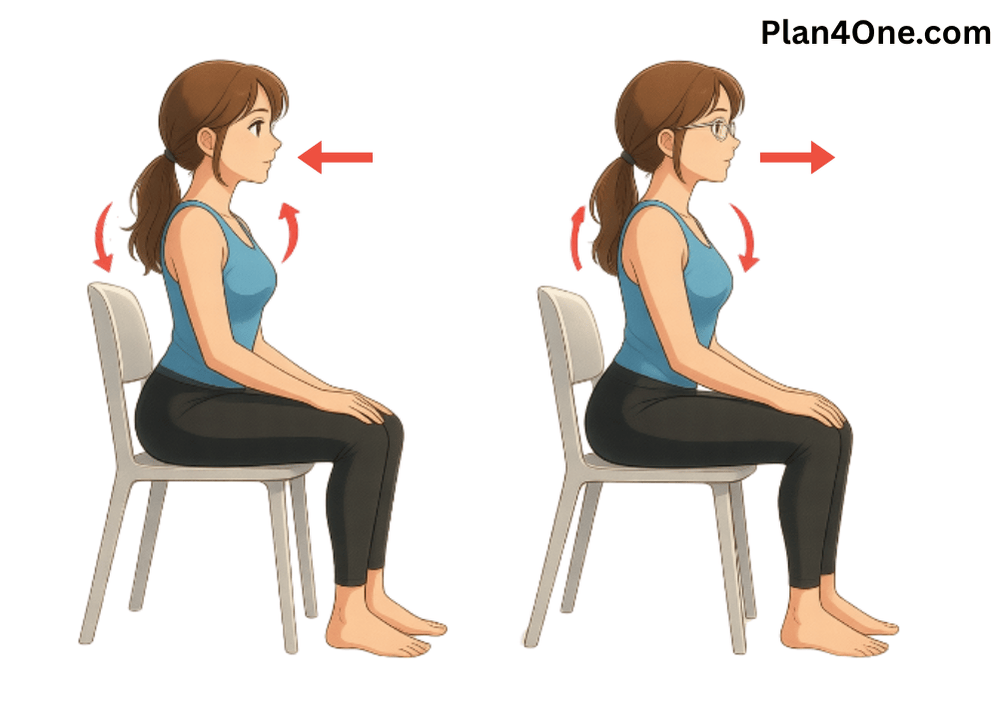
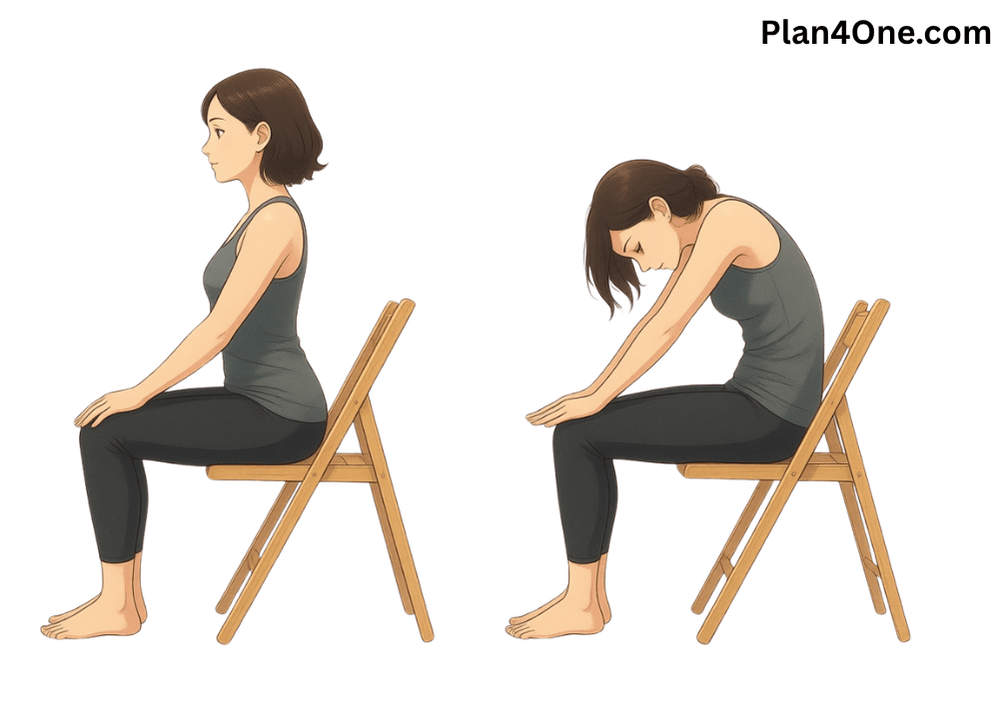
Exercise 2: Seated Cat-Cow Stretch
Purpose: Encourages spinal mobility and helps improve posture.
How to do it:
- Sit towards the front of your chair with your feet flat on the floor.
- Place your hands on your thighs.
- Slowly breathe in and gently lift your chest, drawing your shoulders back.
- As you breathe out, gently round your upper back and allow your chin to move slightly towards your chest.
- Repeat the movement slowly and smoothly.
Think of gently arching and rounding your back rather than forcing a large movement.
Suggested repetitions: 8–10.
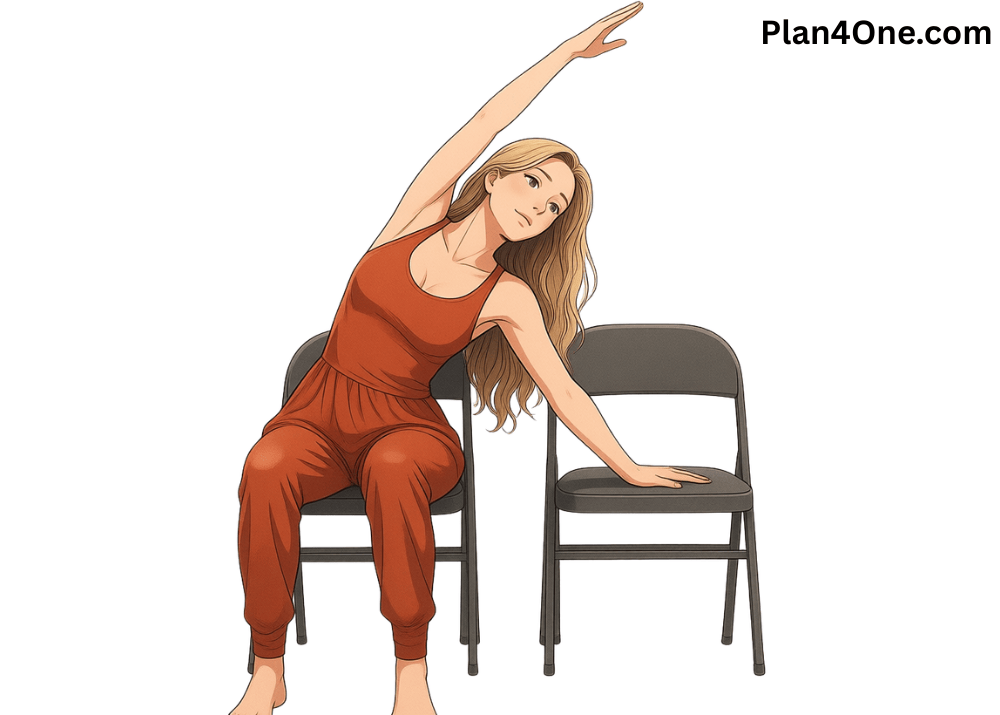
Exercise 3: Seated Side Bends
Purpose: Stretches the sides of your torso and encourages upper-body mobility.
How to do it:
- Sit upright with both feet firmly on the floor.
- Place your right hand on your thigh.
- Slowly raise your left arm above your head.
- Gently lean towards your right side.
- Hold the stretch for approximately 10–15 seconds.
- Return to the starting position and repeat on the opposite side.
Keep your hips facing forward and avoid leaning too far.
Suggested repetitions: 3–4 each side.
Exercise 4: Seated Spinal Twist
Purpose: Encourages gentle rotational movement through your upper back.
How to do it:
- Sit upright with your feet flat on the floor.
- Place your right hand on your left thigh.
- Gently rotate your upper body towards the left.
- Keep your hips facing forward.
- Hold briefly before returning to the centre.
- Repeat in the opposite direction.
Keep the movement gentle and controlled. You should feel a comfortable stretch rather than pain.
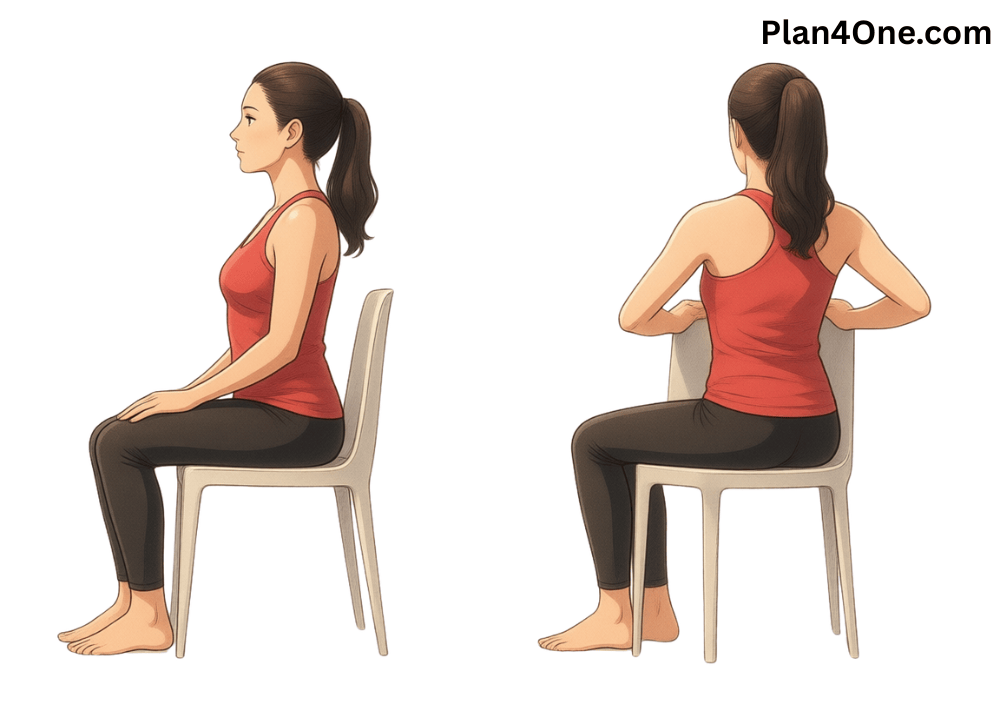
Suggested repetitions: 5–8 each side.
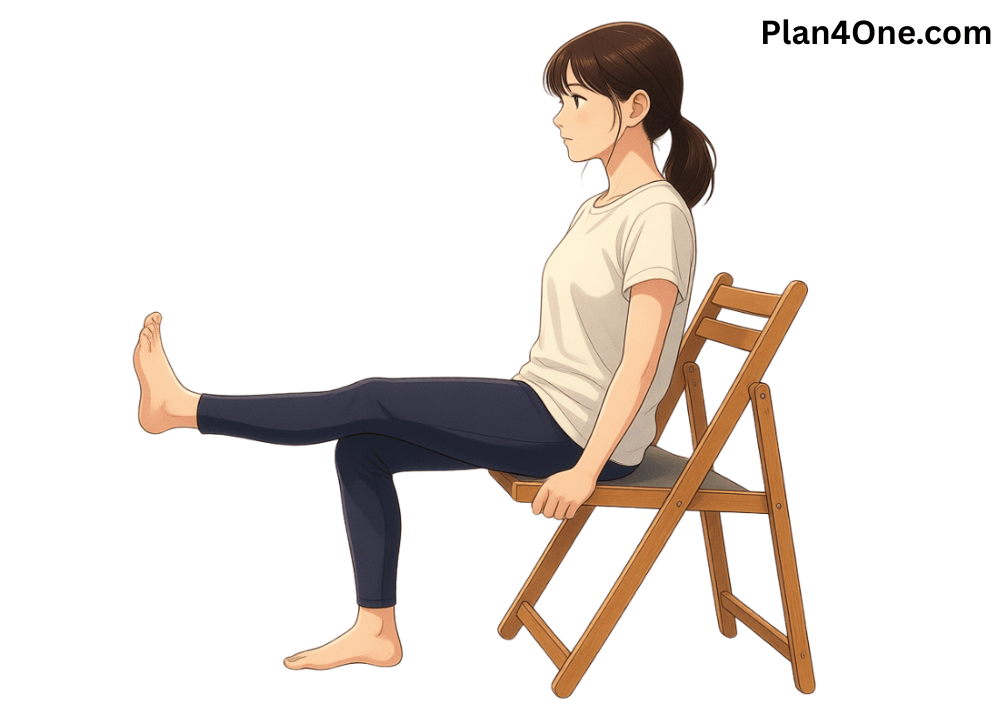
Exercise 5: Seated Leg Extensions
Purpose: Activates the quadriceps and helps maintain leg strength.
How to do it:
- Sit upright with your feet flat on the floor.
- Slowly straighten your right leg in front of you.
- Hold for approximately 2–3 seconds.
- Slowly lower your foot back towards the floor.
- Repeat with your left leg.
Avoid locking your knees or swinging your legs.
Suggested repetitions: 10 each leg.
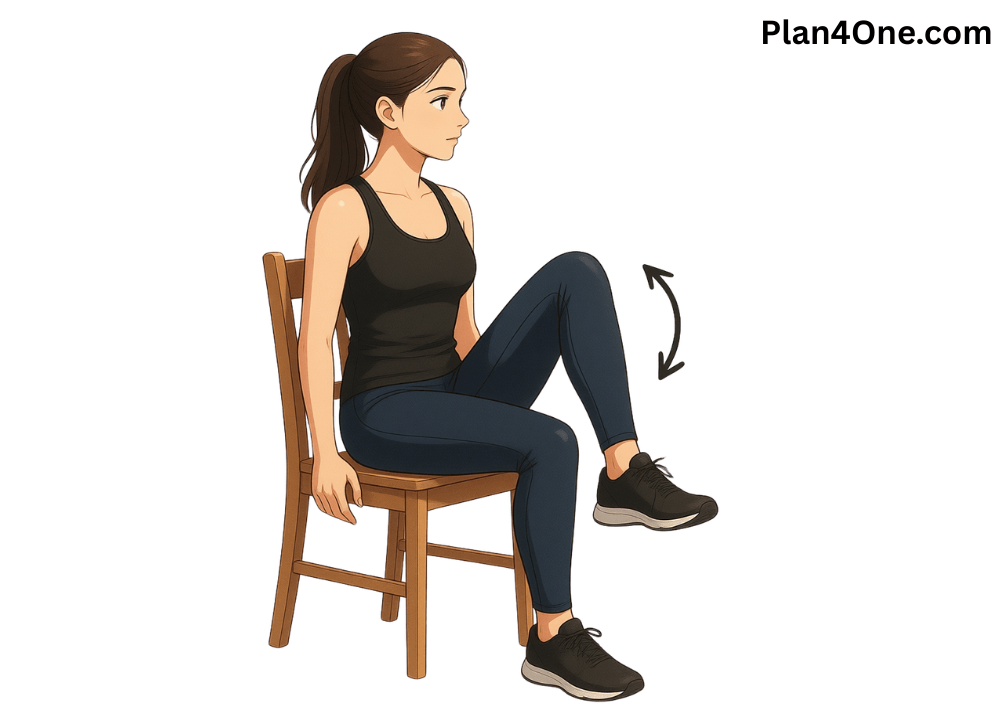
Exercise 6: Seated Marching
Purpose: Encourages leg movement, engages your core and adds a little activity to your routine.
How to do it:
- Sit towards the front of your chair.
- Keep your back upright and your feet flat on the floor.
- Slowly lift your right knee a few centimetres.
- Lower it and repeat with your left knee.
- Continue alternating legs in a controlled marching movement.
If comfortable, gradually increase your pace.
Suggested duration: 45–60 seconds.
Remember, these exercises should feel manageable. You don’t need to push through pain or discomfort to get a benefit.
5. Combining Chair Yoga With Walking and Strength Exercises
If weight loss and improved overall fitness are your goals, I’d recommend combining Chair Yoga with two other activities.
Walking
Walking is one of the simplest ways to increase your daily physical activity.
You don’t need to run marathons or power-walk around your neighbourhood like you’re late for an important meeting.
Start with 15–20 minutes at a comfortable pace and gradually increase the duration as your fitness improves.
Walking can complement Chair Yoga particularly well because it introduces a different type of movement and provides an opportunity to increase your cardiovascular activity.
Basic Strength Training
Maintaining muscle strength becomes increasingly important as we get older.
Muscle helps support everyday activities such as climbing stairs, carrying shopping, getting out of a chair and maintaining balance.
Simple resistance exercises can include:
- Wall push-ups.
- Resistance-band rows.
- Supported sit-to-stand movements.
- Light dumbbell exercises.
- Standing calf raises.
You don’t need a complicated gym programme. A few basic exercises performed consistently can make a worthwhile difference.
Chair Yoga can help prepare your body for these movements, while strength training provides a more targeted muscular challenge.
6. Your First Seven Days of Chair Yoga
The secret to starting an exercise routine isn’t doing everything at once.
It’s finding something manageable enough that you’ll actually stick with it.
Here’s a simple seven-day introductory routine.
The sessions are deliberately short, allowing you to become familiar with the movements without overdoing things.
| Day | Activity | Duration |
|---|---|---|
| Monday | Six beginner Chair Yoga exercises | 15 minutes |
| Tuesday | Comfortable walk | 20 minutes |
| Wednesday | Chair Yoga, concentrating on flexibility | 15–20 minutes |
| Thursday | Comfortable walk | 20–25 minutes |
| Friday | Chair Yoga plus basic strength exercises | 20 minutes |
| Saturday | Comfortable walk | 25–30 minutes |
| Sunday | Gentle stretching or rest | 10 minutes or rest |
A few things to remember:
- Start with shorter sessions if you’re new to exercise.
- Take breaks whenever necessary.
- Don’t worry about completing every repetition.
- Increase your walking time gradually.
- Allow yourself recovery time.
- Focus on consistency rather than perfection.
After your first week, you can gradually increase the duration or difficulty of your sessions as your confidence and fitness improve.
7. Who Can Benefit From Chair Yoga?
One of the appealing things about Chair Yoga is that it can be adapted for different fitness levels and abilities.
It may be particularly useful for:
Beginners: If you’ve never tried yoga before, Chair Yoga provides a gentle introduction without requiring you to get down onto a yoga mat.
People returning to exercise: If you’ve had a lengthy break from physical activity, it can help you reintroduce movement gradually.
Desk workers: Spending hours sitting at a computer can contribute to stiffness and poor movement habits. Short Chair Yoga sessions can provide a useful movement break.
Older adults: Modified yoga movements can help support flexibility, mobility and balance, although exercises should be adapted to individual needs.
People with limited mobility: The seated format can make certain movements more accessible, although anyone with an injury, significant mobility limitation or medical condition should seek appropriate professional advice before starting.
The important thing is to choose exercises that suit your current abilities.
You don’t have to keep up with anyone else.
8. A Few Safety Tips Before You Start
Although Chair Yoga is generally a gentle form of exercise, it’s still important to approach it sensibly.
Here are a few basic precautions.
Choose the right chair.
Use a sturdy chair without wheels. Ideally, it should have a firm seat and allow you to place both feet comfortably on the floor.
Wear comfortable clothing.
Choose clothes that allow you to move freely without restricting your arms, legs or torso.
Don’t force stretches.
You should feel a gentle stretch, not sharp pain. Never force your body into a position simply because someone in an online video makes it look easy.
Move slowly.
Controlled movements are generally more useful than rushing through repetitions.
Breathe normally.
Avoid holding your breath while stretching or exercising.
Modify movements when necessary.
If an exercise causes discomfort, reduce the movement or skip it altogether.
Know when to stop.
Stop exercising if you experience chest pain, dizziness, unusual breathlessness or significant pain. Seek medical advice where appropriate.
If you have an existing medical condition, recent surgery, significant joint problems or concerns about your ability to exercise safely, speak with your healthcare professional before starting.
9. Final Thoughts: Is Chair Yoga Worth Trying?
Absolutely.
Chair Yoga might not be the most exciting-sounding exercise programme in the world, but sometimes the simplest solutions are the ones that work best.
It’s accessible, inexpensive, relatively gentle and doesn’t require you to spend an hour travelling to and from a gym.
More importantly, it provides an opportunity to start moving, improve flexibility and develop better exercise habits.
If your goal is weight loss, combine it with regular walking, appropriate strength exercises and a balanced approach to eating.
If your goal is simply to feel less stiff, move more comfortably and improve your everyday fitness, Chair Yoga is also worth considering.
And remember, you don’t need to become a fitness fanatic overnight.
Start with 15 minutes. Do what you can. Build gradually.
Your body will thank you for making the effort.
What’s Next? Explore the Plan4One Chair Yoga Series
We’ve only scratched the surface of what Chair Yoga can offer.
Depending on what you’re hoping to achieve, there are several ways to develop your routine.
We’ll be exploring each of these in more detail in our upcoming articles:
1. Chair Yoga for Weight Loss: A Gentle Approach to Losing Belly Fat
Discover how to combine Chair Yoga, walking, strength exercises and sensible eating habits to support sustainable weight management.
2. Chair Yoga for Flexibility: Improve Mobility and Reduce Everyday Stiffness
A practical guide to improving flexibility, loosening tight muscles and making everyday movements more comfortable.
3. Chair Yoga for Beginners: A Gentle Low-Impact Fitness Routine
A straightforward programme for people who want to get moving again without jumping straight into demanding exercise.
4. Chair Yoga for Overall Fitness: Improve Strength, Mobility and Wellbeing
A more comprehensive approach to combining Chair Yoga with other activities to improve general fitness and physical wellbeing.
Keep an eye on Plan4One as we work through the series.
And we’d love to hear from you. Have you tried Chair Yoga? Are you looking to improve your flexibility, lose a little weight or simply become more active?
Leave a comment below and tell us how you’re getting started.
Healthy living doesn’t have to be complicated. Sometimes it starts with simply getting out of your chair. Well, technically, this time it starts by staying in it!
